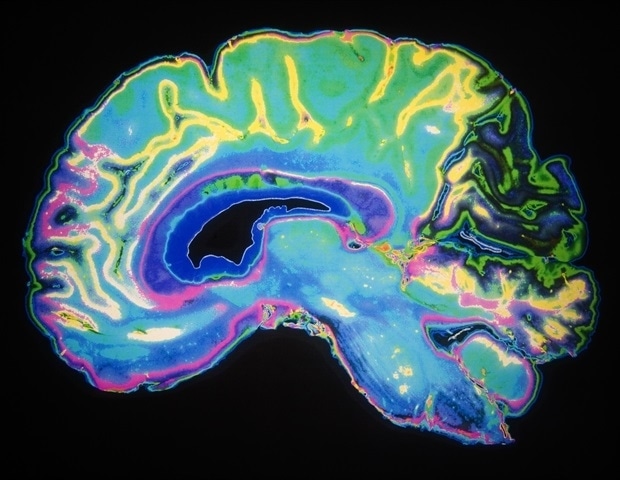
Jülich scientists outline in Science how brain research makes new demands on supercomputing
Jülich, 26 November 2021 – In the latest issue of Science, Katrin Amunts and Thomas Lippert explain how advances in neuroscience demand
Stay updated with breaking news from Katrin Amunts. Get real-time updates on events, politics, business, and more. Visit us for reliable news and exclusive interviews.
Jülich, 26 November 2021 – In the latest issue of Science, Katrin Amunts and Thomas Lippert explain how advances in neuroscience demand
E-Mail EBRAINS, the digital pan-European research infrastructure developed by the EU-funded Flagship Human Brain Project, announces that it has been included in the 2021 Roadmap of the European Strategy Forum on Research Infrastructures (ESFRI). France has served as the Lead Country for the EBRAINS application. This marks an important milestone for EBRAINS and a recognition of the sustainable scientific value of the research infrastructure designed by the Human Brain Project teams. EBRAINS' mission is to be a major enabler to advance brain research covering different areas such as neuroscie...
A team of scientists in the Human Brain Project is using the EBRAINS research infrastructure to learn more about how the brain coordinates complex hand movements.
Unique combination of interoperable services on EBRAINS can revolutionize cognitive computational neuroscience It is easy to take the dexterity of the human hand for granted. Every day we benefit greatly from our ability to manipulate objects with a high degree of control - whether we're typing on a computer, playing a musical instrument, or even just turning a key to unlock a door. While these tasks may seem simple, in-hand object manipulation is actually very complex and engages a large-scale brain network encompassing sensory, association, and motor regions. Now, a team of scientists in th...

Credit: HBP Epilepsy is one of the most common neurological disorders, affecting over 50 Million people worldwide. Patients suffer from seizures caused by sudden neuronal activity engaging at times large networks of the brain. In a third of all cases the disease is resistant to drugs. The most common treatment option for these patients is surgical removal of the "epileptogenic zone", the areas of the brain, where the seizures emerge. "Surgery success depends on locating these areas as precisely as possible. But in clinical practice this often proves very difficult, and the average surgery su...