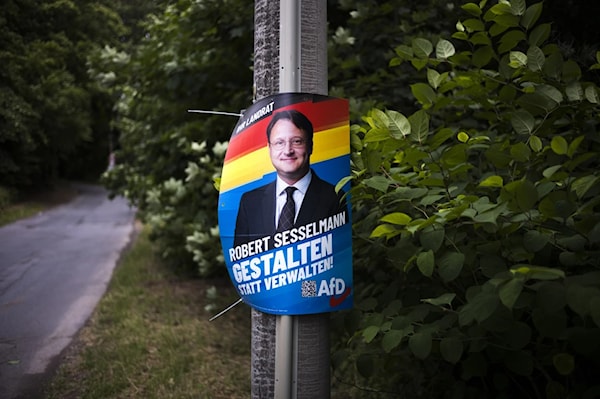
Opinion: Germany's far right isn't on the doorstep of power. It's already arrived
Despite postwar institutions designed to protect democracy from fascism, the fast-rising Alternative for Germany is proving defiant - and highly influential
Stay updated with breaking news from Robert Sesselmann. Get real-time updates on events, politics, business, and more. Visit us for reliable news and exclusive interviews.
Despite postwar institutions designed to protect democracy from fascism, the fast-rising Alternative for Germany is proving defiant - and highly influential
The right-wing extremist Alternative for Germany party is increasingly open about its rejection of democratic principles. But public support is soaring nonetheless. The party's focus on professionalism could be one reason why.
The statements of the CDU party leader on cooperation with the AfD in municipalities meet with fierce resistance from his own ranks. The new CDU general secretary, Carsten Linnemann, defended Merz, on the other hand, saying that it was clear to theCDU that there was "no cooperation" with AfD. Merz had emphasized in the ZDF summer interview that the Union would not cooperate with theAfD. But he limited the limitation only to "legislative bodies" at the European, federal or state level.
Conducted from July 17-21 among 1,266 German citizens, the survey showed that support grew by 2 percent week-on-week and two-fold year-on-year.
As polls give Alternative for Germany (AfD) 20% of the vote, ahead of Olaf Scholz's center-left Social Democrats, chancellor predicts it will fall back to 10%