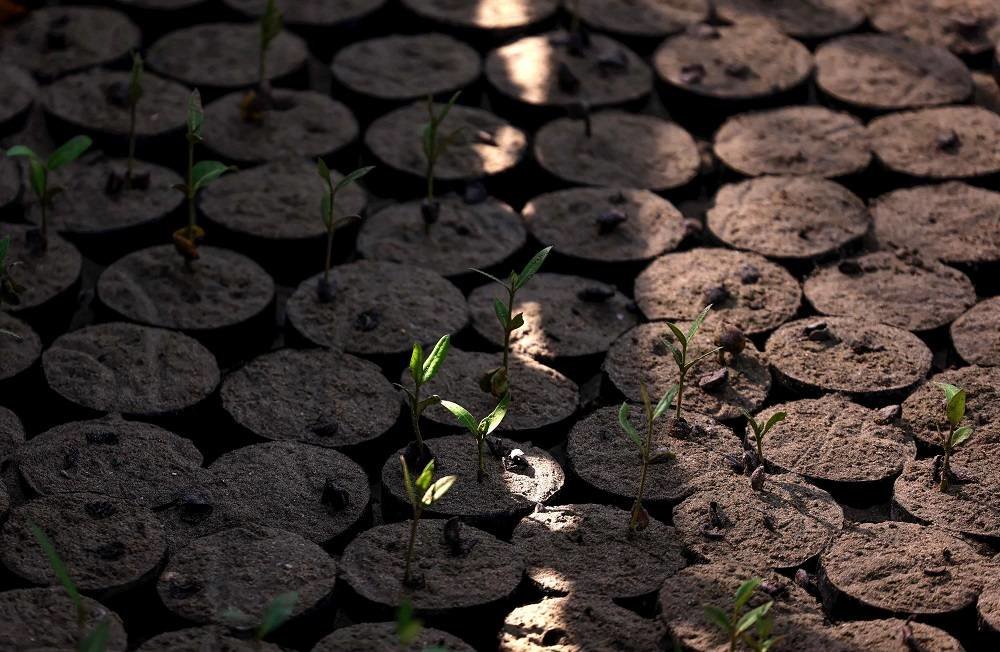
Oman revives CO2-busting mangroves as climate threat lurks
In a muddy wetland in Oman's capital, environmental scientist Zakiya al-Afifi measures the bark of a mangrove tree, estimating its capacity to absorb the carbon dioxide that is slowly heating the planet.
Source: rfi.fr