Dust from Receding Glaciers May Have Major Atmospheric Impacts
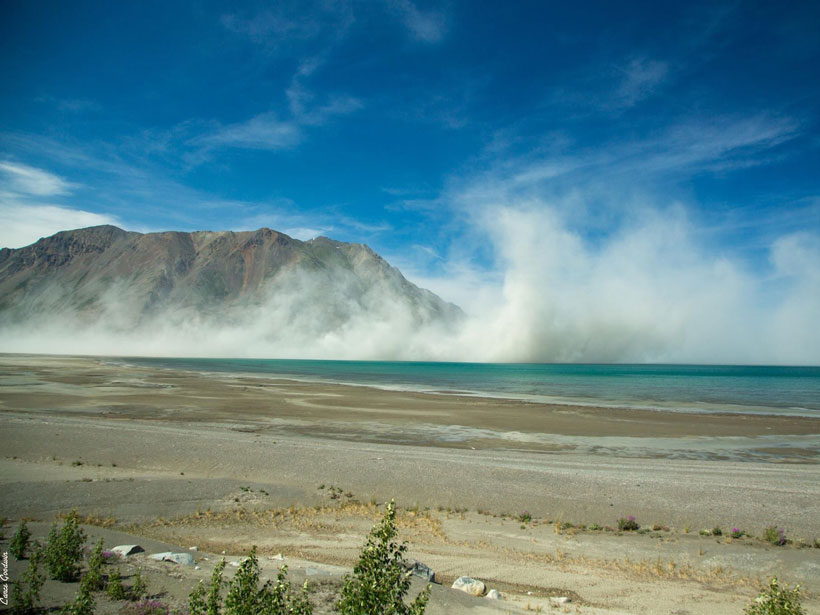
Dust from Receding Glaciers May Have Major Atmospheric Impacts New research is helping scientists understand how Arctic dust created by receding glaciers affects local air quality and global climate. The dry riverbed of the Ä’äy Chù, or Slims River, becomes airborne dust when blown by Arctic winds, affecting local air quality and, potentially, global climate. Credit: Lance Goodwin By Emily Harwitz 16 December 2020 In spring 2016 in the remote northern reaches of Yukon, Canada, a glacier melted so quickly that its meltwater cut a new path through the ice and chang...
Source: eos.org