Vimarsana
Biggest News Aggregation in the World

Viktor Radermaker News Today : Breaking News, Live Updates & Top Stories | Vimarsana

Stay updated with breaking news from Viktor Radermaker. Get real-time updates on events, politics, business, and more. Visit us for reliable news and exclusive interviews.

Top News In Viktor Radermaker Today - Breaking & Trending Today

Chicken-sized dinosaur hunted at night - Vimarsana News

Chicken-sized dinosaur hunted at night

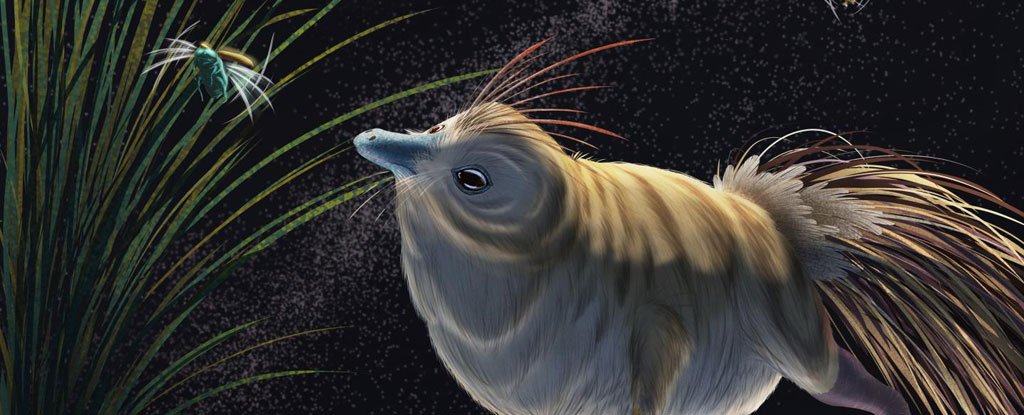
Chicken-sized dinosaur hunted at night The odd little dinosaur dubbed Shuvuuia had incredible hearing and vision. A little dinosaur called Shuvuuia may have hunted in the dark using night vision and super hearing. This chicken-sized therapod lived in the deserts of what is now Mongolia. Its skeleton has a seemingly fragile bird-looking skull and brawny arms with only a single claw. It also had long roadrunner-like legs. The team of researchers, led by Jonah Choiniere and James Neenan of the University of Witwatersrand, South Africa, found the length of the Shuvuuia’s lagena (a cochlea-like ...

2021-05 - Nocturnal dinosaurs: Night vision and superb hearing suggest moonlight predator - Vimarsana News

2021-05 - Nocturnal dinosaurs: Night vision and superb hearing suggest moonlight predator

7 May 2021 - Lars Schmitz, Jonah Choiniere and Roger Benson By looking at the eye bones and ear canals of extinct dinosaurs, researchers show that a small ancient predator likely had senses good as a modern barn owl. Today, barn owls, bats, leopards and many other animals rely on their keen senses to live and hunt under the dim light of stars. These nighttime specialists avoid the competition of daylight hours, hunting their prey under the cloak of darkness, often using a combination of night vision and acute hearing. But was there nightlife 100 million years ago? In a world without owls or l...

Source: wits.ac.za
This Tiny, Odd-Looking Dinosaur Ambushed Its Prey by Moonlight - Vimarsana News

This Tiny, Odd-Looking Dinosaur Ambushed Its Prey by Moonlight

There's only one known species,  Shuvuuia deserti, and it was smaller than a domestic cat, measuring just 2 feet (0.6 meters) long.  Shuvuuia lived about 75 million to 81 million years ago, during the late Cretaceous period (145.5 million to 65.5 million years ago), in what is now the Gobi Desert in Mongolia.  Prior analysis of  Shuvuuia's fossilized eye bones revealed that it had large eyes that were specialized for seeing in dim light. But at the time, little was known about dinosaur adaptations for nocturnal activity. In a new study, scientists looked at skulls from dozens of specie...

Bird-like dinosaur could hunt in total darkness, pointing to thriving prehistoric 'nightlife' - Vimarsana News

Bird-like dinosaur could hunt in total darkness, pointing to thriving prehistoric 'nightlife'

Bird-like dinosaur could hunt in total darkness, pointing to thriving prehistoric 'nightlife' Under the cover of darkness in desert habitats about 70 million years ago, in what is today Mongolia and northern China, a gangly looking dinosaur employed excellent night vision and superb hearing to thrive as a menacing pint-sized nocturnal predator. Social Sharing Thomson Reuters · Posted: May 07, 2021 12:15 PM ET | Last Updated: May 7 Prof. Jonah Choiniere of the University of the Witwatersrand in Johannesburg, South Africa, is seen holding a 3D-printed model of the lagena, an inner-ear struct...

Source: cbc.ca
Tiny dinosaur hunted in the dark and heard better than an owl - Vimarsana News

Tiny dinosaur hunted in the dark and heard better than an owl

Tiny dinosaur hunted in the dark and heard better than an owl CNN 5/7/2021 By Katie Hunt, CNN © Courtesy Mick Ellison/American Museum of Natural History Shown is a fossilized skeleton of Shuvuuia deserti. The chicken-size dinosaur had large eyes and an inner ear similar to that of a barn owl, suggesting it hunted at night, according to new research. With unusually large eyes and hair-trigger hearing, the tiny desert-dwelling dinosaur hunted its prey at night, offering more definitive evidence that dinosaurs weren't only active in the daytime. It's one of the findings of ...

Source: msn.com