Protected areas slow declines unevenly across the tetrapod tree of life
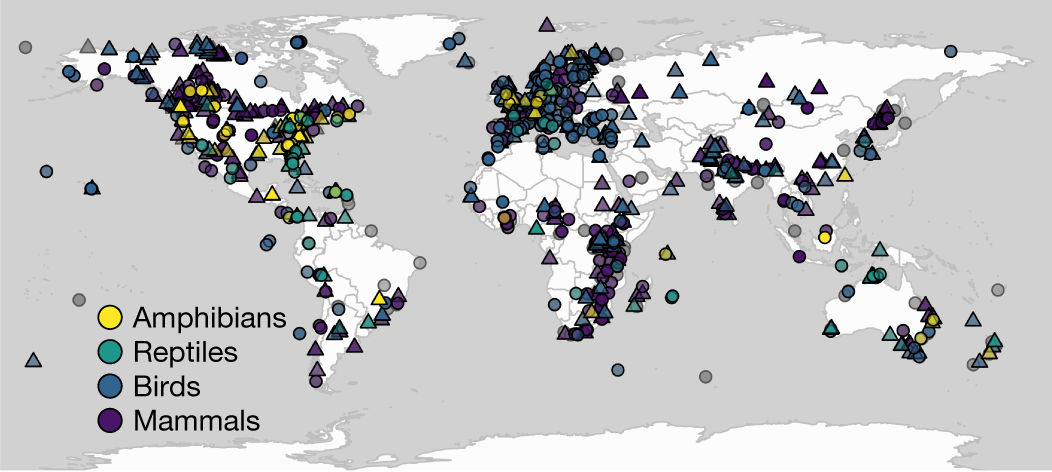
Protected areas (PAs) are the primary strategy for slowing terrestrial biodiversity loss. Although expansion of PA coverage is prioritized under the Convention on Biological Diversity, it remains unknown whether PAs mitigate declines across the tetrapod tree of life and to what extent land cover and climate change modify PA effectiveness1,2. Here we analysed rates of change in abundance of 2,239 terrestrial vertebrate populations across the globe. On average, vertebrate populations declined five times more slowly within PAs (−0.4% per year) than at similar sites lacking protection (ͨ...
Source: nature.com