List: Healthcare and Biotech Startups That Will Take Off in 2022, According to Investors
We asked investors for the startups that are poised for success, from new ways of providing care to cutting-edge approaches to drug development.
Stay updated with breaking news from Bert Vogelstein. Get real-time updates on events, politics, business, and more. Visit us for reliable news and exclusive interviews.
We asked investors for the startups that are poised for success, from new ways of providing care to cutting-edge approaches to drug development.
Hundreds of cancer-linked genes play a different role in causing disease than scientists had expected.
Date Time Ludwig Johns Hopkins researchers develop new DNA detection method to improve liquid biopsies May 6, 2021, NEW YORK – A team of researchers at the Ludwig Center at Johns Hopkins has developed a far more sensitive and accurate next-generation gene sequencing technology for the detection of rare fragments of mutated DNA shed by tumors into body fluids. The detection of such DNA fragments-commonly referred to as “liquid biopsies”-holds the promise of easing the detection of cancers at their earliest stages, when they are most likely to be curable. In a study led by Ludwig Johns Ho...

E-Mail IMAGE: New SaferSeqS technology detects rare mutations in blood in a highly efficient manner and reduces the error rate. view more Credit: Elizabeth Cooke Next-generation gene sequencing (NGS) technologies --in which millions of DNA molecules are simultaneously but individually analyzed-- theoretically provides researchers and clinicians the ability to noninvasively identify mutations in the blood stream. Identifying such mutations enables earlier diagnosis of cancer and can inform treatment decisions. Johns Hopkins Kimmel Cancer Center researchers developed a new technolog...
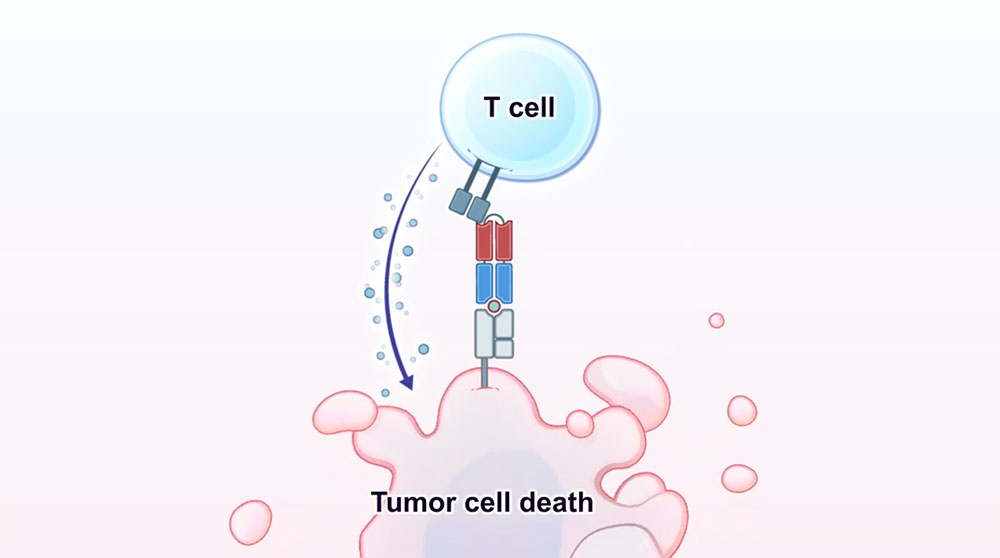
share: This news release, issued by Johns Hopkins Medicine, describes a novel targeted immunotherapy approach. This new approach employs bispecific antibodies to treat cancer by eliciting a Tcell response against mutated p53. The researchers used the Highly Automated Macromolecular Crystallography (AMX) and Frontier Microfocusing Macromolecular Crystallography (FMX) beamlines to characterize the molecular structure of the proteins. AMX and FMX are beamlines at the National Synchrotron Light Source II (NSLS-II)—a U.S. Department of Energy (DOE) Office of Science User Facility at Broo...