Optical clocks at sea
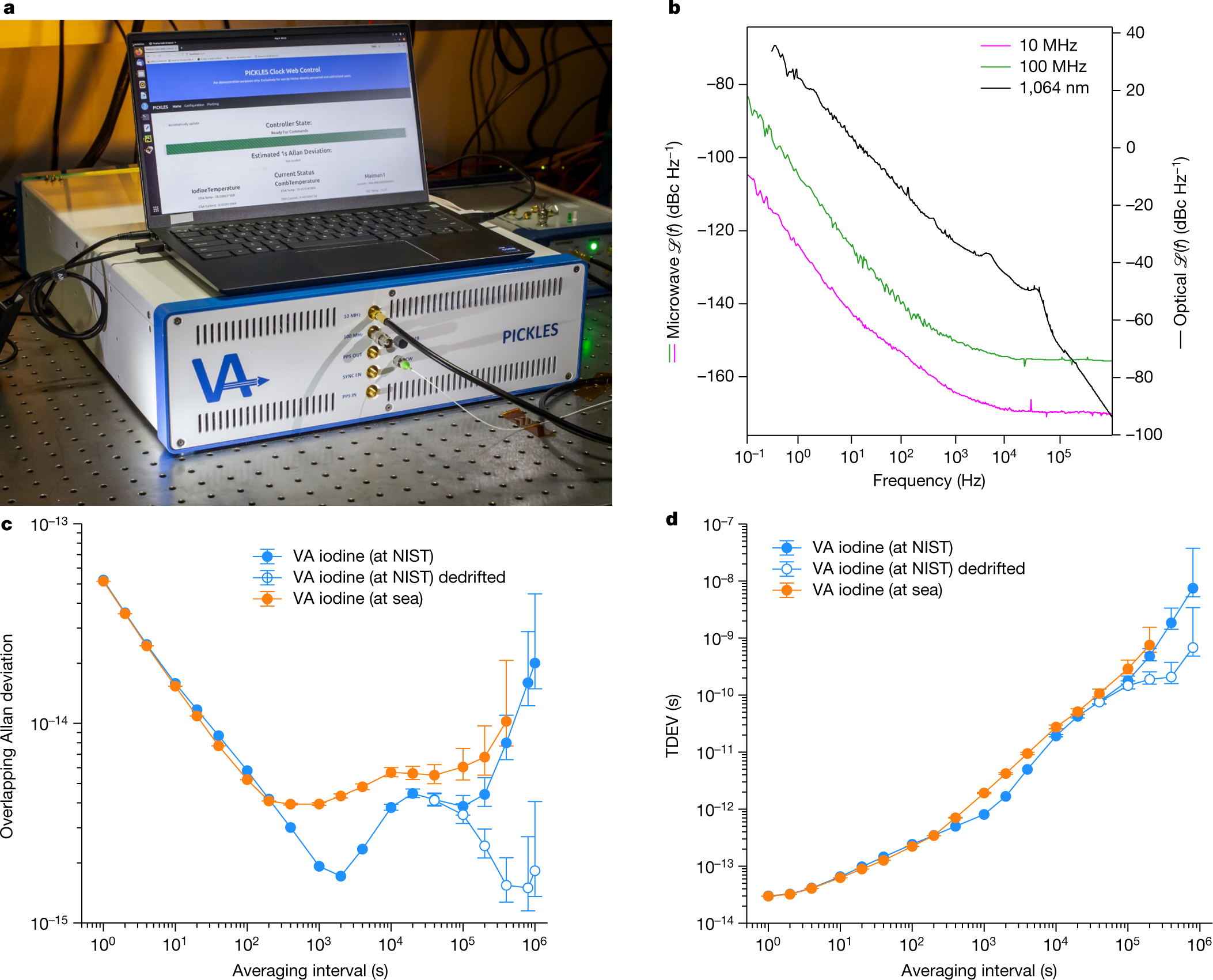
Deployed optical clocks will improve positioning for navigational autonomy1, provide remote time standards for geophysical monitoring2 and distributed coherent sensing3, allow time synchronization of remote quantum networks4,5 and provide operational redundancy for national time standards. Although laboratory optical clocks now reach fractional inaccuracies below 10−18 (refs. 6,7), transportable versions of these high-performing clocks8,9 have limited utility because of their size, environmental sensitivity and cost10. Here we report the development of optical clocks with the requisite c...
Source: nature.com