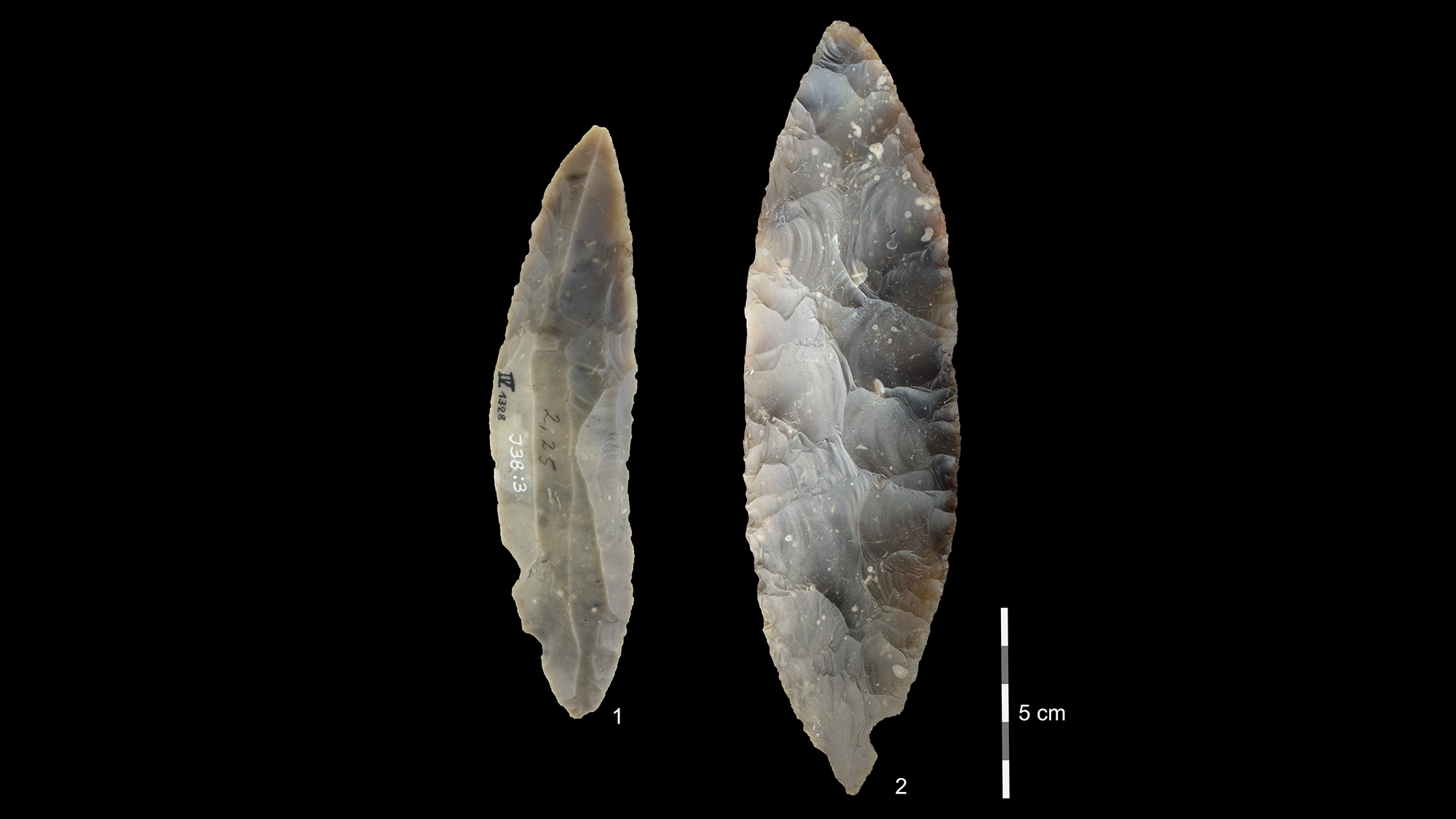
45,000-year-old bones unearthed in cave are oldest modern-human remains in Central Europe
The finding suggests that 'successive pulses of small groups' of humans replaced Neanderthals in Europe starting around 45,000 years ago.
Stay updated with breaking news from Middle Paleolithic. Get real-time updates on events, politics, business, and more. Visit us for reliable news and exclusive interviews.
The finding suggests that 'successive pulses of small groups' of humans replaced Neanderthals in Europe starting around 45,000 years ago.
New studies of Stone Age tools and bones also suggest human ancestors could adapt to a tough climate.
From the depths of German caves, scientists have extracted genetic material from hyena remnants, unveiling connections to extinct Pleistocene megafauna
A study has found a link between Neanderthals and morning people.
In a study published in the journal “Scientific Reports,” researchers from the Senckenberg Centre for Human Evolution and Palaeoenvironment (SHEP) at ....