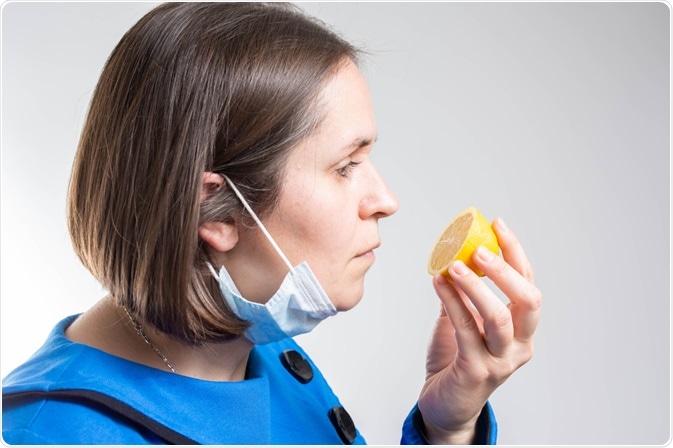
COVID-19 and Smell Loss (Anosmia) Image Credit: Nenad Cavoski/Shutterstock.com Smell loss and COVID-19 Smell loss (anosmia), reduced smell (hyposmia) or altered smell are common features of colds and flu, in addition to sinusitis and allergies (e.g., hay fever). Smell loss is also associated with a large number of COVID-19 cases, even in the absence of fever and cough. In addition, changes in taste are also commonly associated with smell loss in COVID-19. According to the NHS (UK), the 3 key symptoms of COVID-19 are: 1) fever, 2) new continuous cough & 3) smell and/or taste loss – and in so...