EarthSky | See 1st new images of Ganymede in over 20 years
NASA's Juno spacecraft has sent back the first new images of Ganymede in over 20 years, showing the complex surface of Jupiter's largest moon in great detail.
Source: earthsky.org
Stay updated with breaking news from Ultraviolet Spectrograph. Get real-time updates on events, politics, business, and more. Visit us for reliable news and exclusive interviews.
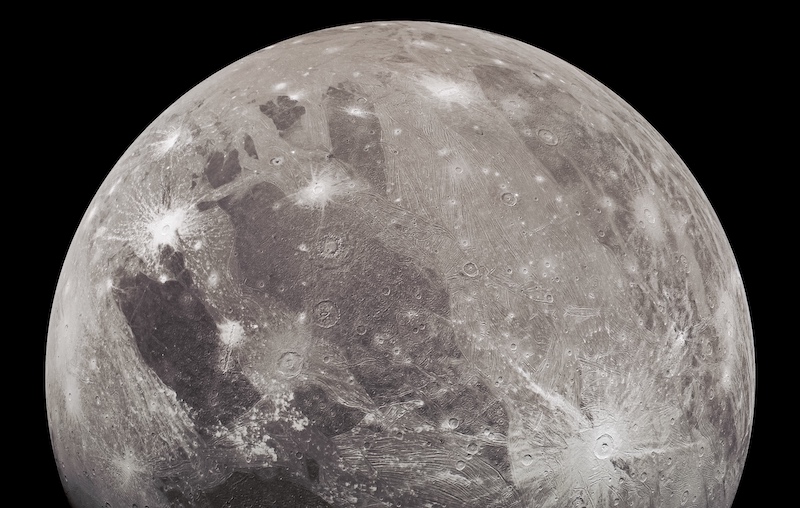
NASA's Juno spacecraft has sent back the first new images of Ganymede in over 20 years, showing the complex surface of Jupiter's largest moon in great detail.

NASA's Juno will come within 645 miles (1,038km) of Jupiter's largest moon Ganymede and gather significant observations. On Monday, June 7, at 1:35pm EDT (11:05pm IST), the flyby will be the closest a spacecraft has come to the solar system's largest natural satellite since NASA's Galileo in May 2000.

On June 7, NASA's Juno spacecraft will skim past Ganymede, the largest moon in the solar system, giving scientists their best look at the world in two decades.

From left to right: The mosaic and geologic maps of Jupiter’s moon Ganymede were assembled incorporating the best available imagery from NASA’s Voyager 1 and 2 spacecraft and NASA’s Galileo spacecraft. Credits: USGS Astrogeology Science Center/Wheaton/NASA/JPL-Caltech. The first of the gas-giant orbiter’s back-to-back flybys will provide a close encounter with the massive moon after over 20 years. On Monday, June 7, at 10:35 a.m. Pacific Time, NASA’s Juno spacecraft will come within 645 miles of the surface of Jupiter’s largest moon, Ganymede. The flyby will be the closest a spac...
Juno is set to make the closest fly-by of Ganymede - which is larger than both Mercury and dwarf planet Pluto - since Galileo in May 2000.