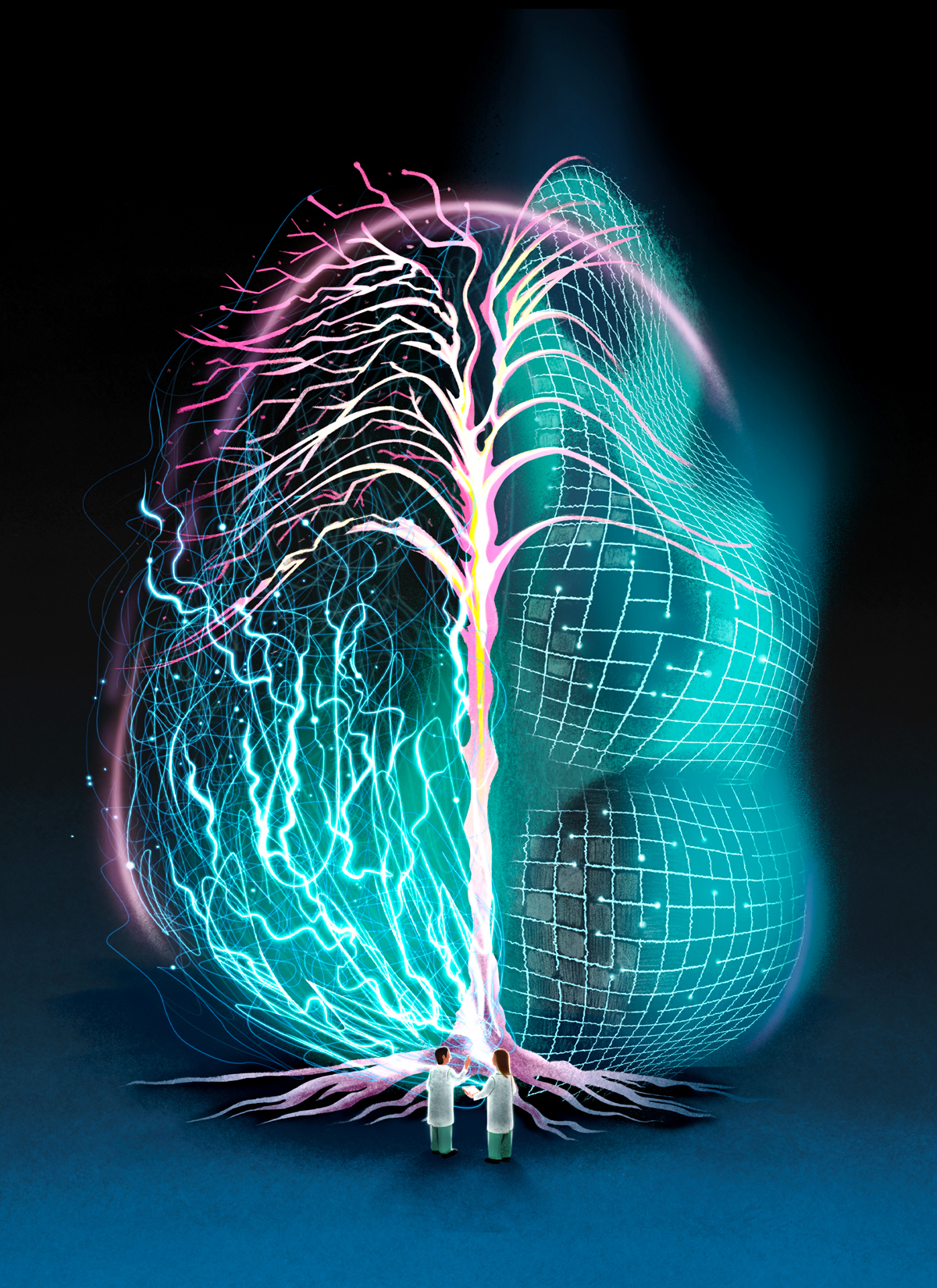
Illustration by Jeremy Leung, Published 14:37, May. 19, 2021 In the ’90s, when he was a doctoral student at the University of Lausanne, in Switzerland, neuroscientist Sean Hill spent five years studying how cat brains respond to noise. At the time, researchers knew that two regions—the cerebral cortex, which is the outer layer of the brain, and the thalamus, a nut-like structure near the centre—did most of the work. But, when an auditory signal entered the brain through the ear, what happened, specifically? Which parts of the cortex and thalamus did the signal travel to? And in wh...