'Bonanza' gold veins in rocks finally explained
Scientists now think they understand how gold can form veins thicker than a man's forearm: the clumping of gold nanoparticles.
Source: livescience.com
Stay updated with breaking news from Duncan Mcleish. Get real-time updates on events, politics, business, and more. Visit us for reliable news and exclusive interviews.

Scientists now think they understand how gold can form veins thicker than a man's forearm: the clumping of gold nanoparticles.
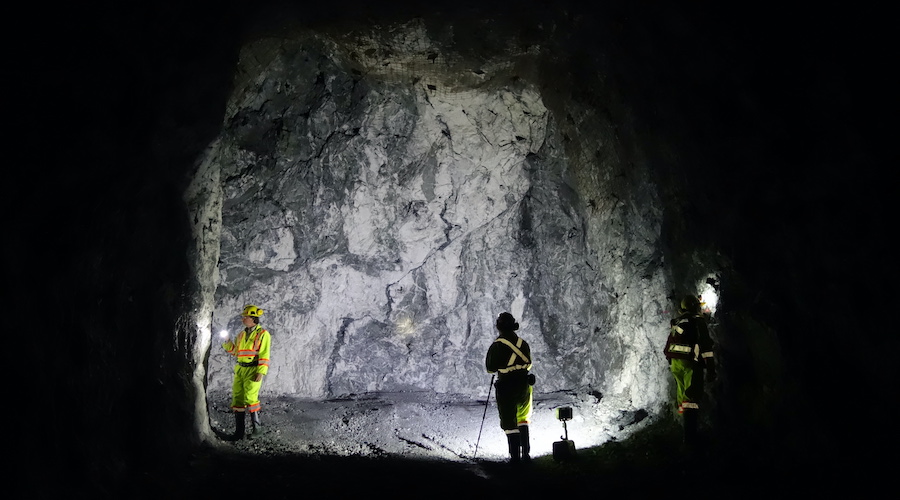
Researchers from McGill University solved the paradox of ultrahigh-grade or bonanza gold formations.

The scientists also reportedly suggested that the process that “operated” bonanza gold systems like the Brucejack Mine may have also been involved in the formation of...
The Mystery Formation of Extremely Rich Gold Veins Might Finally Be Solved 24 MAY 2021 Gold, for all its wonderful uses, isn't hugely abundant in Earth's upper layers. For each ton of crust material, there's an estimated just 0.004 grams of the precious metal. Yet somehow, there are regions that contain "bonanza" abundances - hyper-enrichment, in the scientific parlance. How these gold veins form in time spans as short as days from hydrothermal systems that only contain trace amounts of the metal has been a geological mystery. It's one that now has an answer, from the most unlikely of cl...
McGill University Image by Duncan McLeish. For decades scientists have been puzzled by the formation of rare hyper-enriched gold deposits in places like Ballarat in Australia, Serra Palada in Brazil, and Red Lake in Ontario. While such deposits typically form over tens to hundreds of thousands of years, these “ultrahigh-grade” deposits can form in years, month, or even days. So how do they form so quickly? Studying examples of these deposits from the Brucejack Mine in northwestern British Columbia, McGill University PhD student Duncan McLeish and McGill Professor Anthony Williams-Jones of...