Four Telescopes Observe Universe to Detect Dangerous Asteroids
Middle-East Arab News and Opinion - Asharq Al-Awsat is the world’s premier pan-Arab daily newspaper, printed simultaneously each day on four continents in 14 cities
Source: aawsat.com
Stay updated with breaking news from John Tonry. Get real-time updates on events, politics, business, and more. Visit us for reliable news and exclusive interviews.

Middle-East Arab News and Opinion - Asharq Al-Awsat is the world’s premier pan-Arab daily newspaper, printed simultaneously each day on four continents in 14 cities
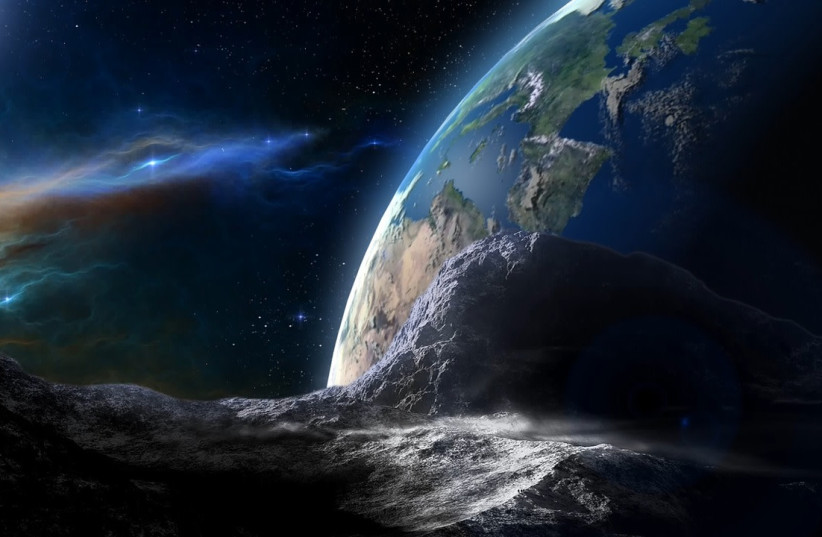
ATLAS cannot spot small asteroids in time to deflect them, but it will provide enough time to evacuate areas and take measures to mitigate damages.
Based at the University of University of Hawaiʻi Institute for Astronomy (IfA), the Asteroid Terrestrial-impact Last Alert System (ATLAS) has expanded its reach.

The telescope expansion in the southern hemisphere will enable observations at night when it is daytime in Hawaiʻi.
To Map the Universe, Astrophysicists Launch Largest Sky Survey Yet KPNO/NOIRLab/NSF/AURA/P. Marenfeld The Dark Energy Spectroscopic Instrument (DESI) is installed on the Nicholas U. Mayall 4-meter Telescope on Kitt Peak National Observatory near Tucson, AZ. Newswise — Cambridge, MA — In 1983, astrophysicists at the Center for Astrophysics | Harvard & Smithsonian(CfA) released a cosmic map using 2,400 galaxies. Now, CfA scientists are aiming to map 30 million. In the largest quest yet to map the universe, an international team of researchers is using DESI, or the Dark Energy Spectroscopic...