High fatigue resistance in a titanium alloy via near-void-free 3D printing
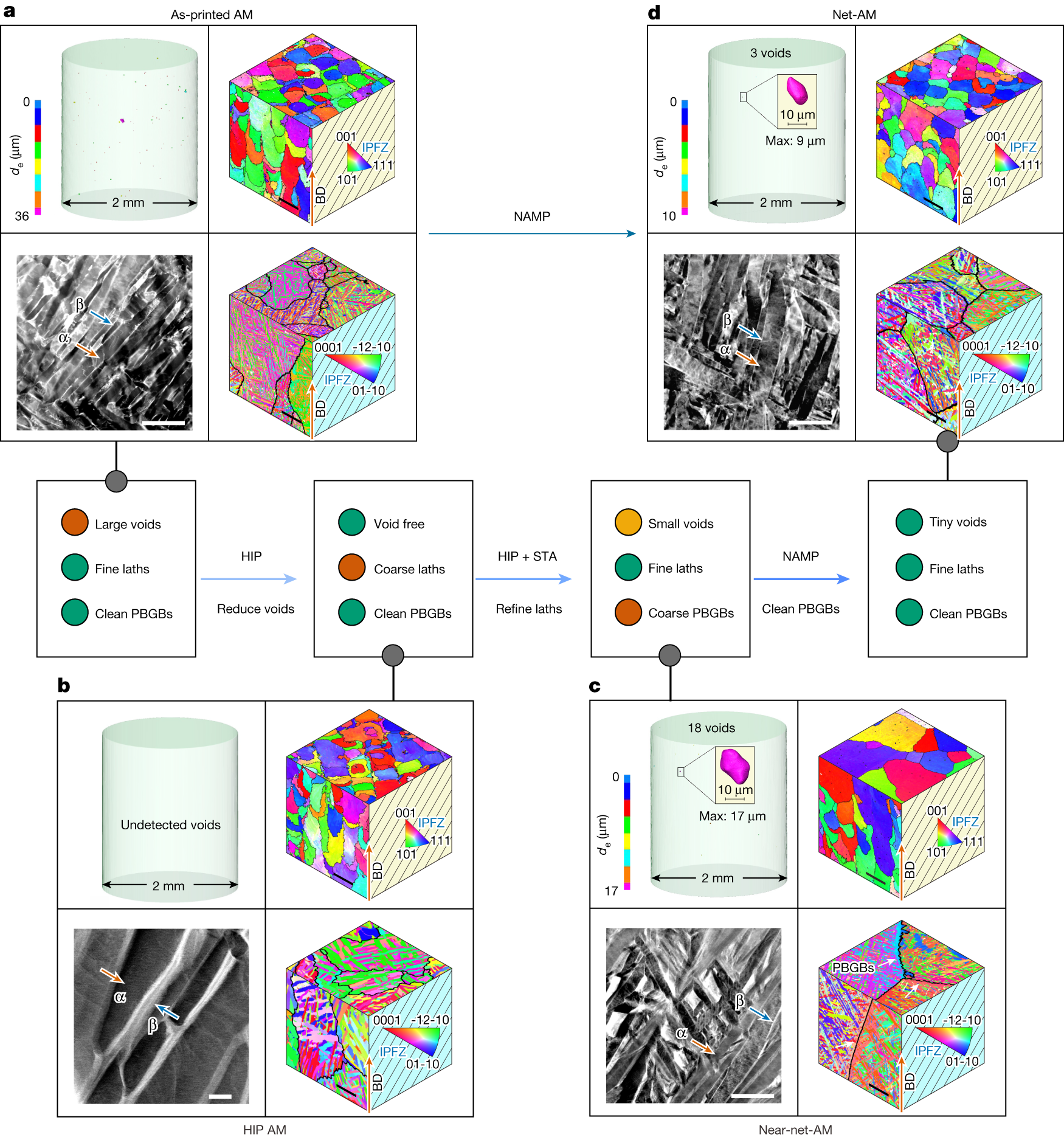
The advantage of 3D printing—that is, additive manufacturing (AM) of structural materials—has been severely compromised by their disappointing fatigue properties1,2. Commonly, poor fatigue properties appear to result from the presence of microvoids induced by current printing process procedures3,4. Accordingly, the question that we pose is whether the elimination of such microvoids can provide a feasible solution for marked enhancement of the fatigue resistance of void-free AM (Net-AM) alloys. Here we successfully rebuild an approximate void-free AM microstructure in Ti-6Al-4V tita...
Source: nature.com