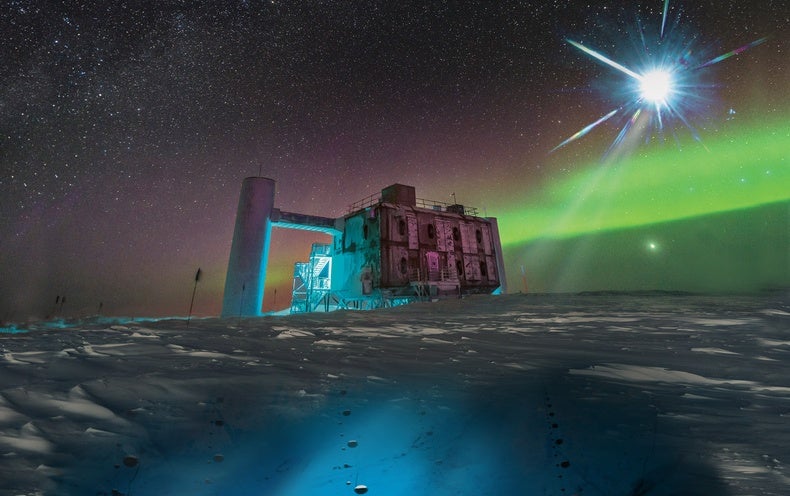
Scientific American New radio-based observatories could soon detect ultrahigh-energy neutrinos, opening a new window on extreme cosmic physics Print An artist’s composite of the IceCube Neutrino Observatory in Antarctica, accompanied by a distant astrophysical source emitting neutrinos that are detected in IceCube’s subsurface sensors. Credit: IceCube and NSF Advertisement Ever since their discovery in the 1960s, ultrahigh-energy cosmic rays have captivated scientists, who wonder where they come from. Like all cosmic rays, they are arguably misnamed: they are not “rays” of radiation b...