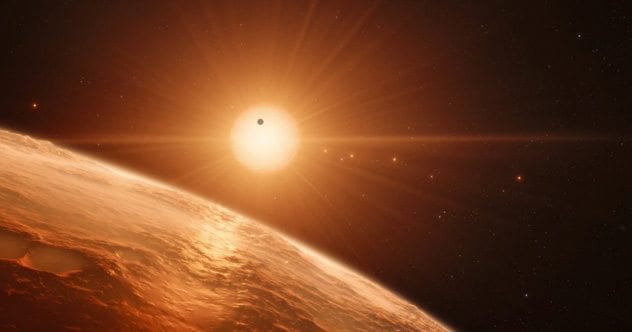
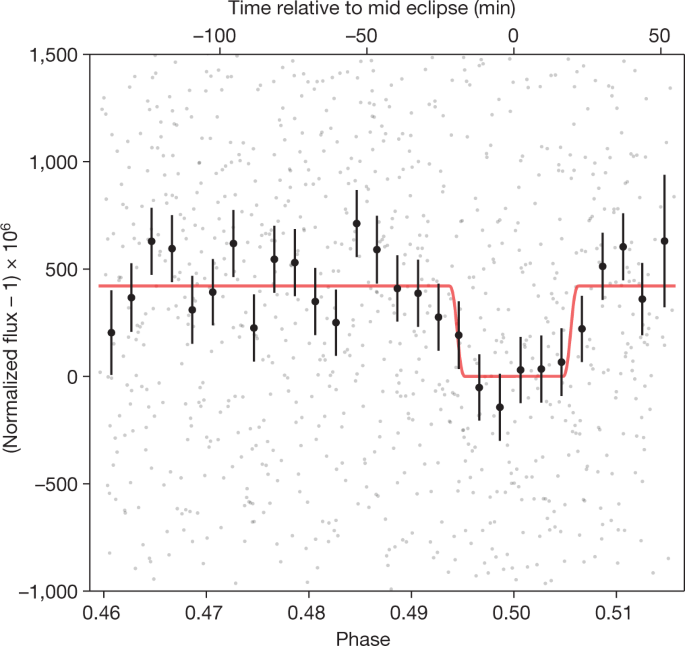
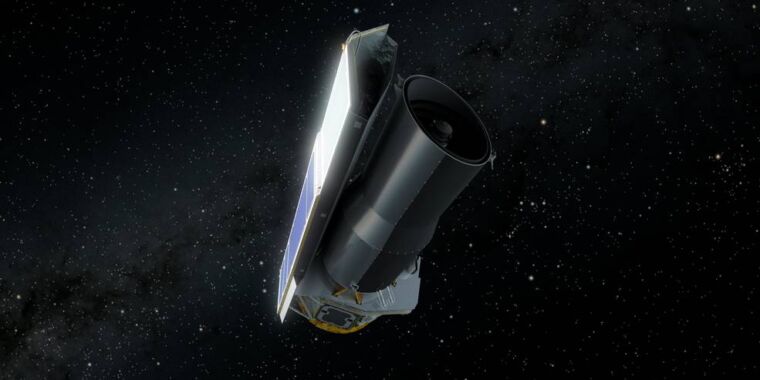
Seven rocky planets orbit the nearby dwarf star TRAPPIST-1, providing a unique opportunity to search for atmospheres on small planets outside the Solar System1. Thanks to the recent launch of the James Webb Space Telescope (JWST), possible atmospheric constituents such as carbon dioxide (CO2) are now detectable2,3. Recent JWST observations of the innermost planet TRAPPIST-1 b showed that it is most probably a bare rock without any CO2 in its atmosphere4. Here we report the detection of thermal emission from the dayside of TRAPPIST-1 c with the Mid-Infrared Instrument (MIRI) on JWST...