Vimarsana
Biggest News Aggregation in the World

Page 2 - Space Sci News Today : Breaking News, Live Updates & Top Stories | Vimarsana

Stay updated with breaking news from Space Sci. Get real-time updates on events, politics, business, and more. Visit us for reliable news and exclusive interviews.

Top News In Space Sci Today - Breaking & Trending Today

High-Solar Activity Ionospheric Modeling Leveraging Machine Learning - Inside GNSS - Global Navigation Satellite Systems Engineering, Policy, and Design - Vimarsana News

High-Solar Activity Ionospheric Modeling Leveraging Machine Learning - Inside GNSS - Global Navigation Satellite Systems Engineering, Policy, and Design

A comparison against classic models. SHISHIR PRIYADARSHI, WAHYUDIN P. SYAM, ANDRÉS ABELARDO GARCÍA ROQUÉ, ALEJANDRO PÉREZ CONESA, GMV GUILLAUME BUSCARLET, RAÜL ORÚS PÉREZ, MICKAEL DALL’ ORSO, EUROPEAN SPACE AGENCY (ESA) Sun is the source of energy needed to ionize the Earth’s atmosphere, which is an

Minutes-duration optical flares with supernova luminosities - Vimarsana News

Minutes-duration optical flares with supernova luminosities

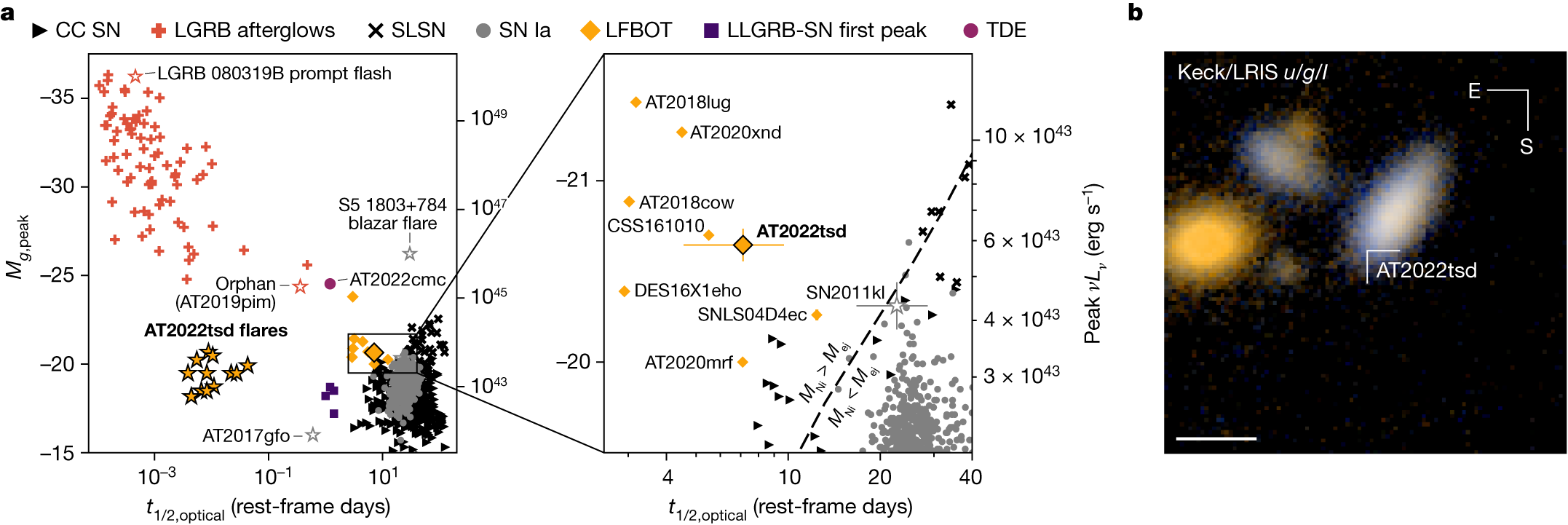
In recent years, certain luminous extragalactic optical transients have been observed to last only a few days1. Their short observed duration implies a different powering mechanism from the most common luminous extragalactic transients (supernovae), whose timescale is weeks2. Some short-duration transients, most notably AT2018cow (ref. 3), show blue optical colours and bright radio and X-ray emission4. Several AT2018cow-like transients have shown hints of a long-lived embedded energy source5, such as X-ray variability6,7, prolonged ultraviolet emission8, a tentative X-ray quasiperiodic o...

Source: nature.com
A super-massive Neptune-sized planet - Vimarsana News

A super-massive Neptune-sized planet

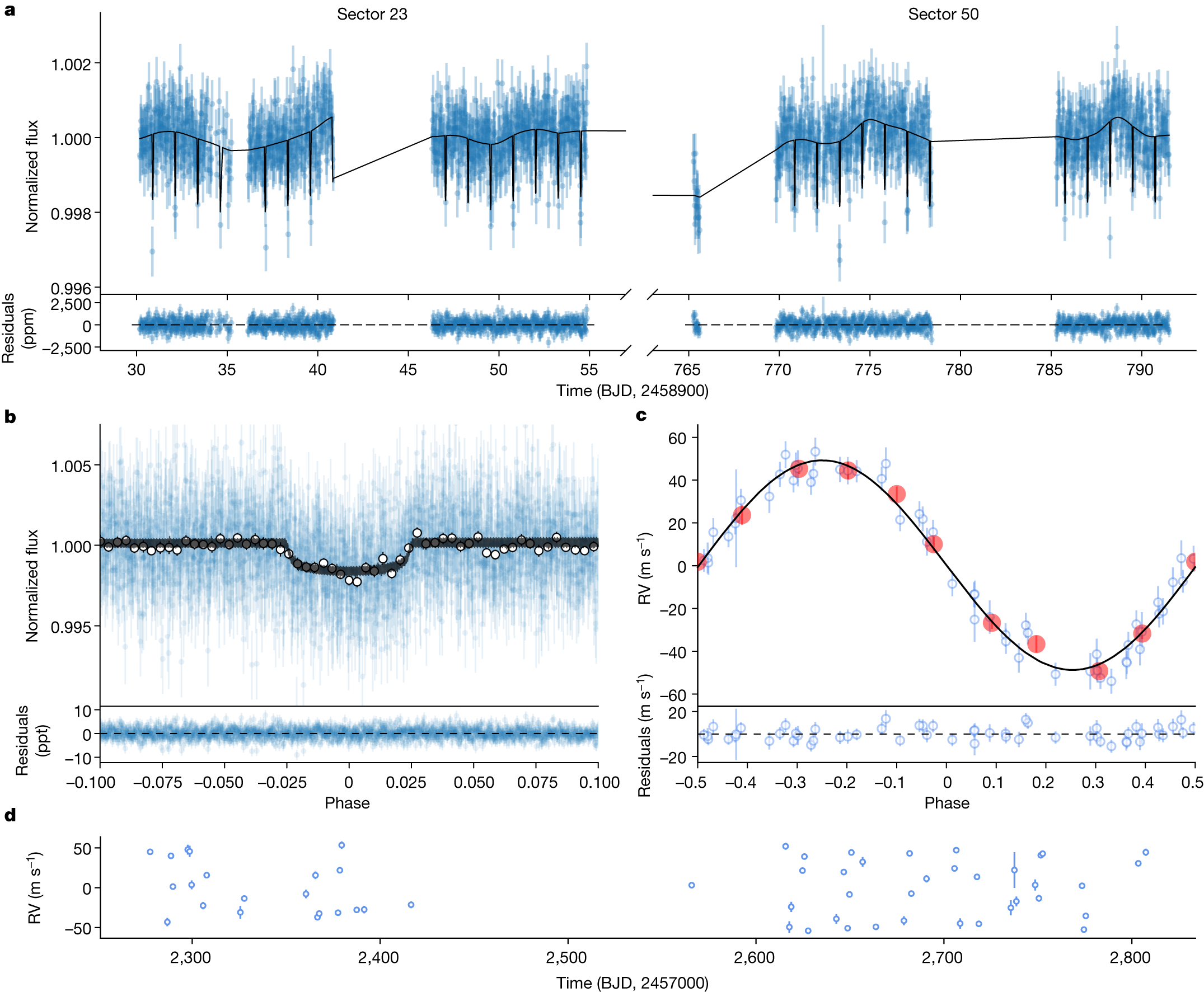
Neptune-sized planets exhibit a wide range of compositions and densities, depending on factors related to their formation and evolution history, such as the distance from their host stars and atmospheric escape processes. They can vary from relatively low-density planets with thick hydrogen–helium atmospheres1,2 to higher-density planets with a substantial amount of water or a rocky interior with a thinner atmosphere, such as HD 95338 b (ref. 3), TOI-849 b (ref. 4) and TOI-2196 b (ref. 5). The discovery of exoplanets in the hot-Neptune desert6, a...

Source: nature.com
A planetary collision afterglow and transit of the resultant debris cloud - Vimarsana News

A planetary collision afterglow and transit of the resultant debris cloud

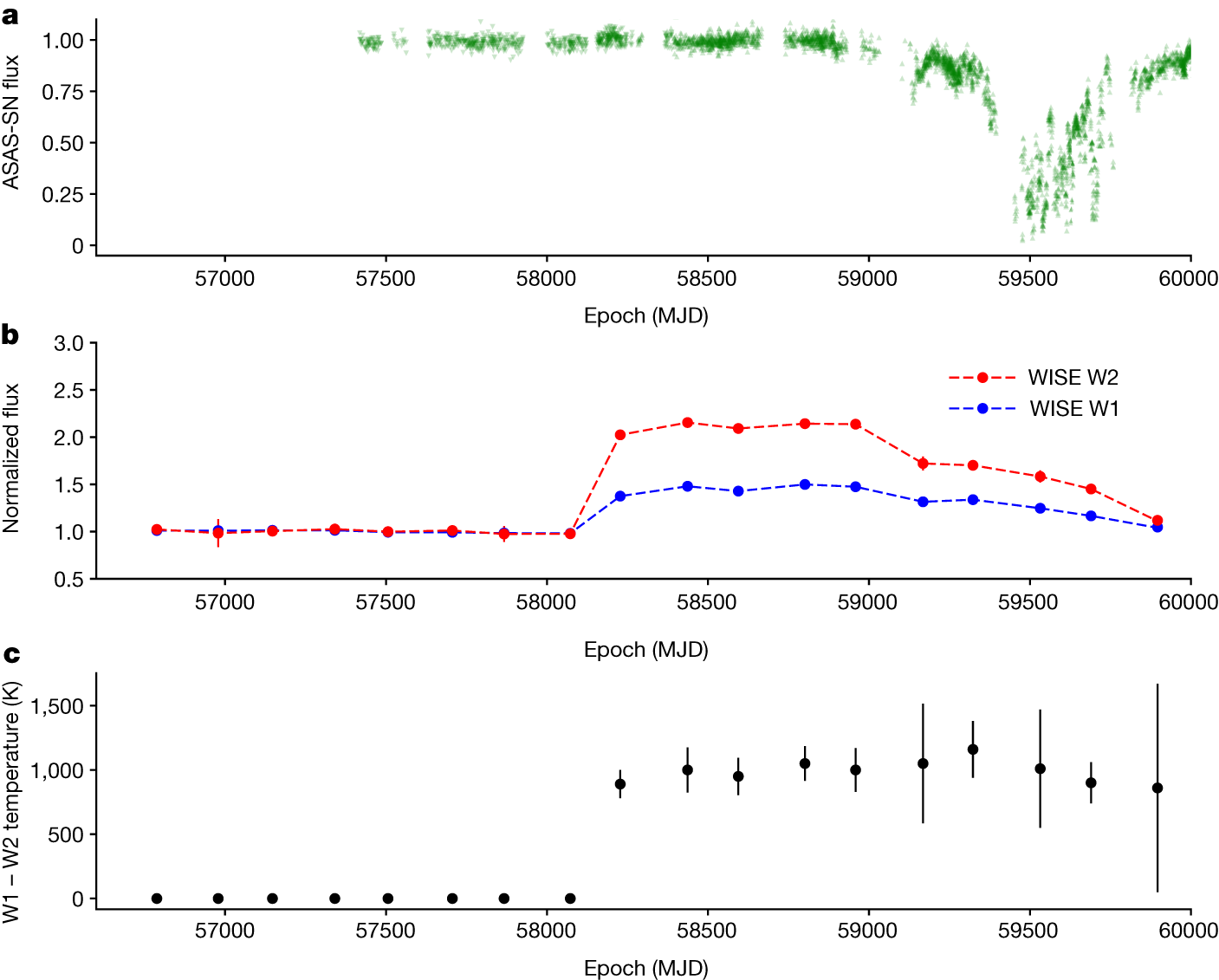
Planets grow in rotating disks of dust and gas around forming stars, some of which can subsequently collide in giant impacts after the gas component is removed from the disk1–3. Monitoring programmes with the warm Spitzer mission have recorded substantial and rapid changes in mid-infrared output for several stars, interpreted as variations in the surface area of warm, dusty material ejected by planetary-scale collisions and heated by the central star: for example, NGC 2354–ID8 (refs. 4,5), HD 166191 (ref. 6) and V488 Persei7. Here we report combined observations of the ...

Source: nature.com
Vanadium oxide and a sharp onset of cold-trapping on a giant exoplanet - Vimarsana News

Vanadium oxide and a sharp onset of cold-trapping on a giant exoplanet

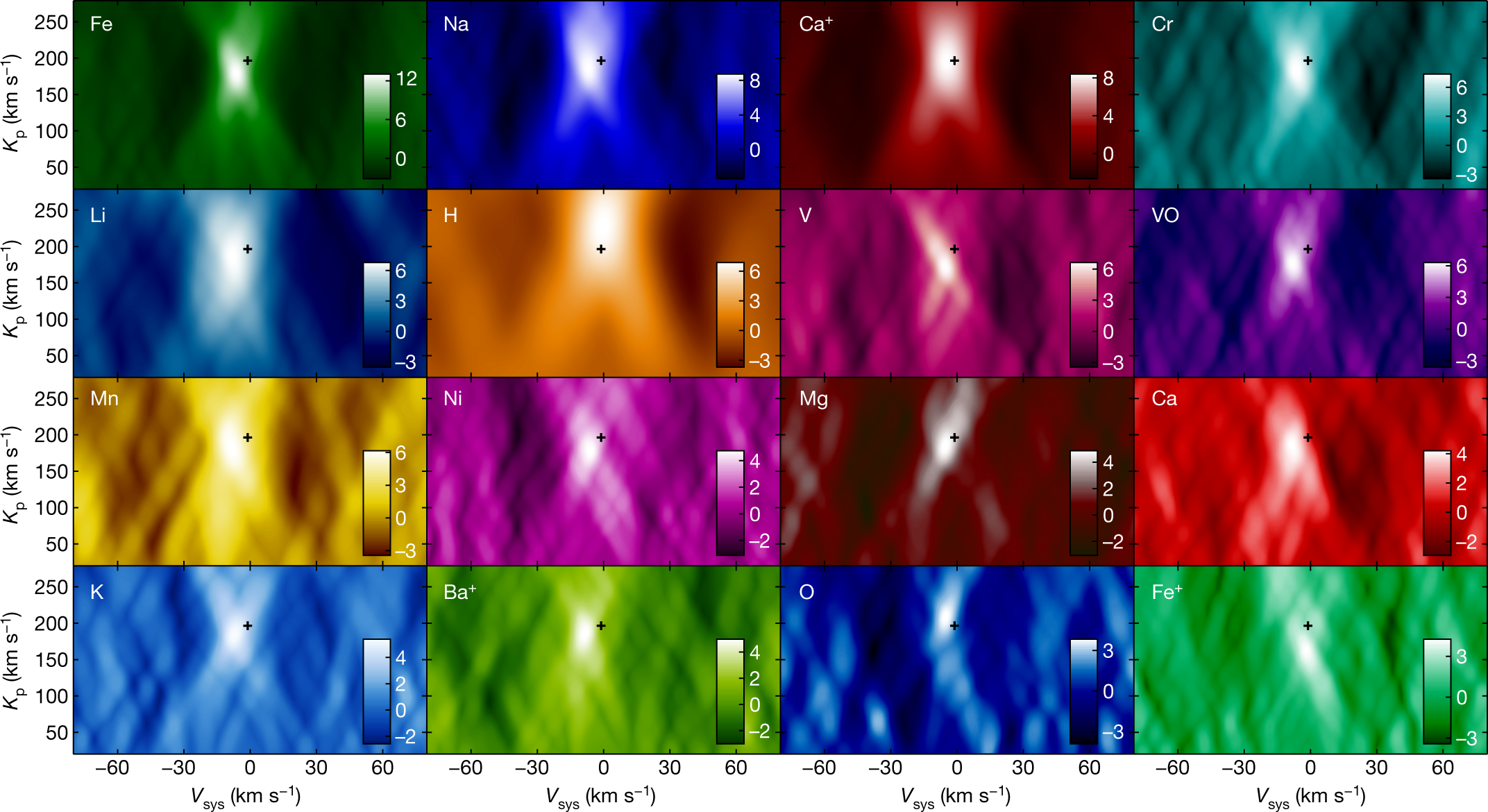
The abundance of refractory elements in giant planets can provide key insights into their formation histories1. Owing to the low temperatures of the Solar System giants, refractory elements condense below the cloud deck, limiting sensing capabilities to only highly volatile elements2. Recently, ultra-hot giant exoplanets have allowed for some refractory elements to be measured, showing abundances broadly consistent with the solar nebula with titanium probably condensed out of the photosphere3,4. Here we report precise abundance constraints of 14 major refractory elements on the ultra-hot giant...

Source: nature.com