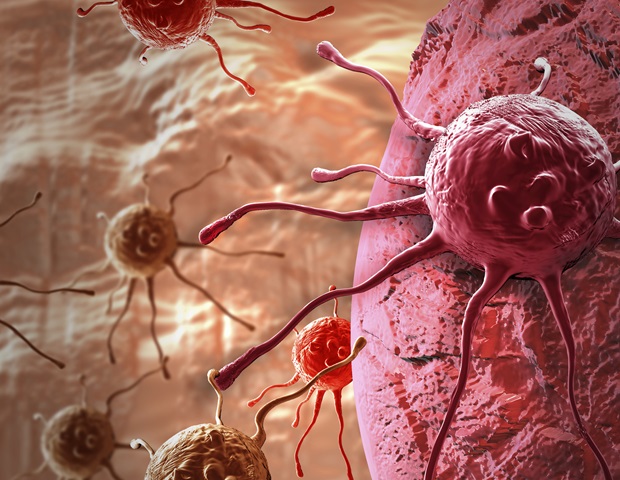
New kidney tissue model could help assess safety of immunotherapy drugs
A growing repertoire of cell and molecule-based immunotherapies is offering patients with indomitable cancers new hope by mobilizing their immune systems against tumor cells.
Stay updated with breaking news from Ethical Research. Get real-time updates on events, politics, business, and more. Visit us for reliable news and exclusive interviews.
A growing repertoire of cell and molecule-based immunotherapies is offering patients with indomitable cancers new hope by mobilizing their immune systems against tumor cells.
T cell bispecific antibodies (TCBs) are an emerging class of immunotherapeutics with several TCBs approved by the FDA for the treatment of leukemias, lymphomas, and myelomas. TCBs label tumor cells with one of their ends, and attract immune cells with another end to coerce them into tumor cell killing. However, one major challenge in the development of TCBs are “on-target, off-tumor” toxicities at sites in the body that also express TCB-targeted antigens. A new collaboration of Jennifer Lewis’ group and researchers from the Roche Innovation Centers in Switzerland and Germany now created ...
Father Phillip Larrey, a leading Catholic expert in the area, discusses AI’s promises and perils.
Artificial intelligence and large-language model chatbots have generated significant attention in higher education, and in research practice. Whether ChatGPT, Bard, Jasper Chat, Socratic, Bing AI, DialoGPT, or something else, these are all shaping how education and research occur. In this Editorial, we offer five editorial principles to guide decision-making for editors, which will also become policy for the Journal of University Teaching and Learning Practice. First, we articulate that non-human authorship does not constitute authorship. Second, artificial intelligence should be leveraged to ...