Top-predator recovery abates geomorphic decline of a coastal ecosystem
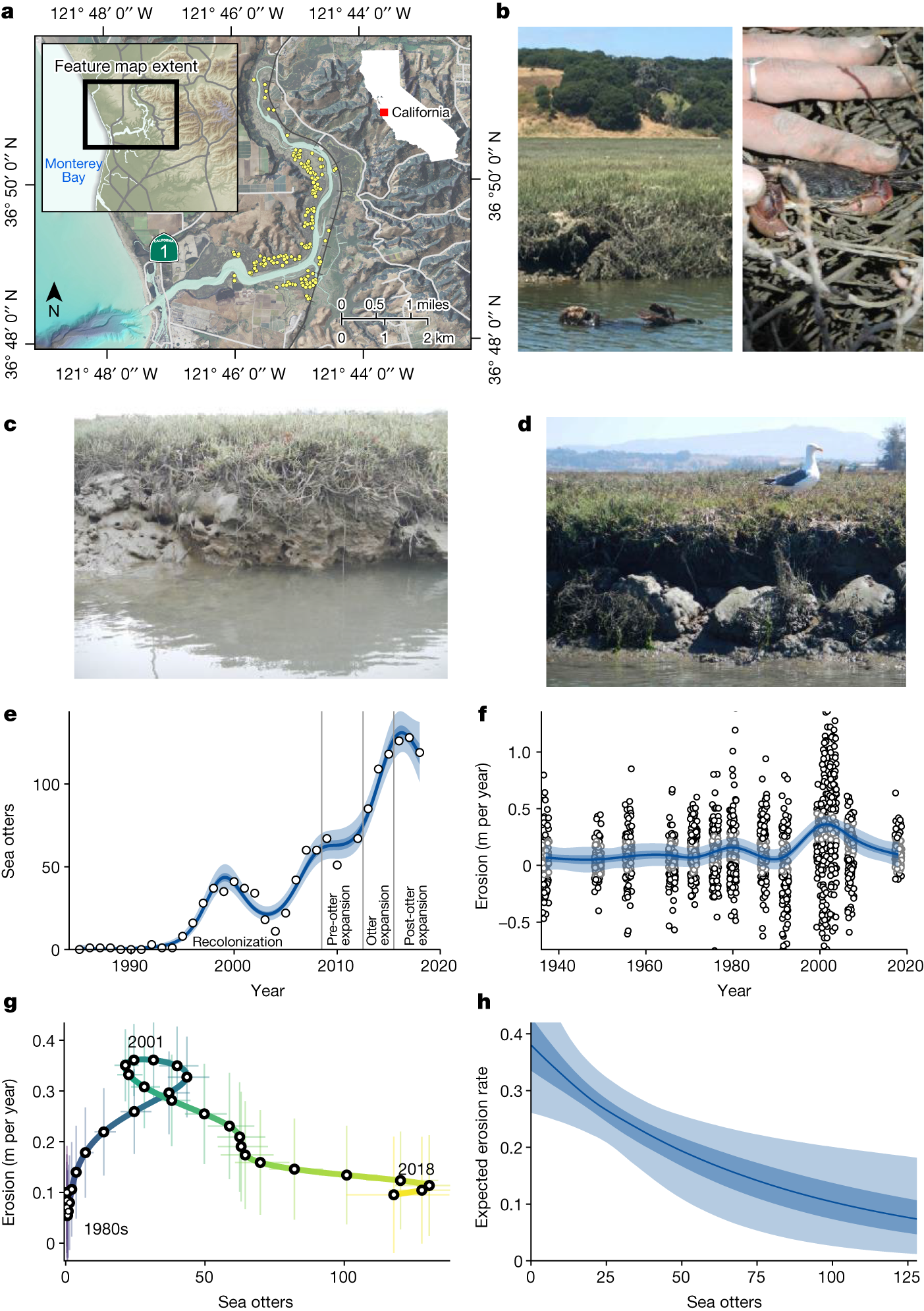
The recovery of top predators is thought to have cascading effects on vegetated ecosystems and their geomorphology1,2, but the evidence for this remains correlational and intensely debated3,4. Here we combine observational and experimental data to reveal that recolonization of sea otters in a US estuary generates a trophic cascade that facilitates coastal wetland plant biomass and suppresses the erosion of marsh edges—a process that otherwise leads to the severe loss of habitats and ecosystem services5,6. Monitoring of the Elkhorn Slough estuary over several decades suggested top-down co...
Source: nature.com